
Congressional Investigation Exposes Aerospace Tech Transfers
Representative John Moolenaar released a 65-page congressional report on November 19, 2026, detailing how American and European aerospace contractors transferred advanced technology and technical expertise to Chinese firms under lawful commercial arrangements. The House Select Committee on China concluded that these legal business partnerships inadvertently supported the military-civil fusion strategy of the Chinese Communist Party, a national policy that integrates civilian commercial development with military modernization. Lawmakers warned that the People's Liberation Army exploits civilian technology to advance its strategic ambitions, creating a direct national security risk for the United States and its allies.
目次
The investigation scrutinized several joint ventures and co-development agreements involving major U.S. defense suppliers and Chinese entities. According to the investigation details published by the committee, these commercial arrangements enabled Chinese companies to acquire crucial industrial capabilities and know-how. Committee Chairman John Moolenaar emphasized the gravity of the situation regarding military-civil fusion.
American and European companies transferred technology to China that could be used against our brave men and women in uniform. With the CCP's military-civil fusion there are no private companies in China. The PLA will exploit civilian technology and use it to advance its military ambitions and that is what happened here.
Named Aerospace Giants and Licensed Transfers
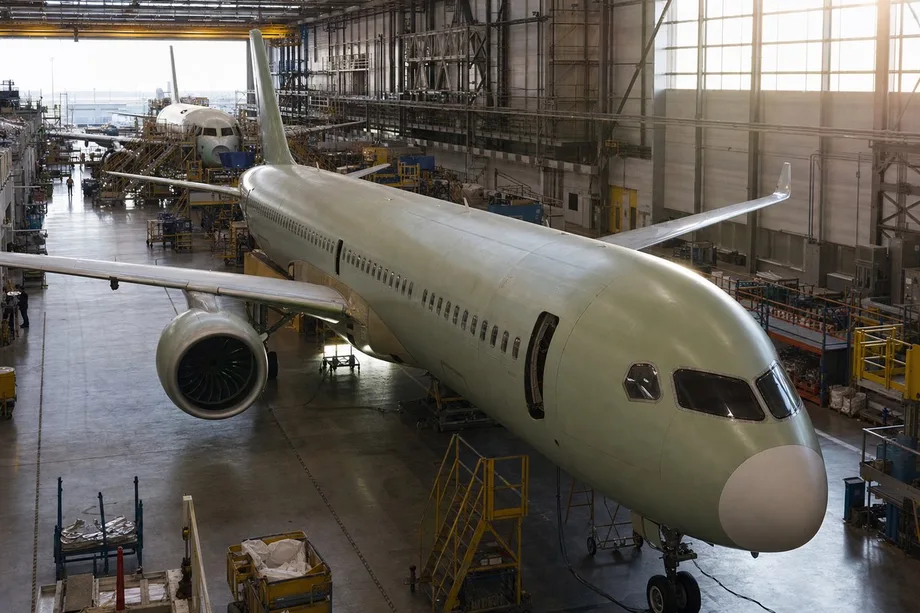
Honeywell Aerospace, GE Aerospace, and Collins Aerospace were specifically identified in the congressional findings as companies that repeatedly sought and obtained government licenses for controlled technology transfers. These transactions involved People's Republic of China military end users and other military-linked organizations participating in Chinese commercial aerospace platforms like the C919 passenger jet. Investigators noted that export controls relied heavily on company due diligence, even when commercial incentives favored business continuity and past enforcement actions had revealed compliance weaknesses. Furthermore, the report revealed that PRC-based joint ventures created a structural gap in U.S. national security reviews by allowing sensitive capabilities to move offshore outside the standard Committee on Foreign Investment in the United States framework.
Specific corporate partnerships highlighted in the investigation involved major technological exchanges. Honeywell established a joint venture in 2013 with the 618 Institute, a subsidiary of the state-owned Aviation Industry Corporation of China, to develop flight-control systems for the C919 passenger aircraft. The 618 Institute also designs flight-control technology for Chinese fighter jets such as the J-10, J-11, J-15, and J-20. Similarly, GE Aerospace partnered with an AVIC subsidiary to develop electronic systems, contributing core technology used to run multiple aircraft systems through shared computers. The Aviation Industry Corporation of China is a state-owned conglomerate that manufactures many of China's combat aircraft, and its 615 Institute reassigned personnel from military programs to assist with technical issues on the C919 passenger jet in 2020. Collins Aerospace maintained partnerships involving Chinese radar, navigation, and communications organizations, including AVIC's Leihua Electronic Technology Research Institute, which had previously worked on radar systems for Chinese combat aircraft.
Corporate Defenses and Regulatory Compliance
Representatives for the named aerospace companies defended their business operations by emphasizing that their projects had received full regulatory clearance. Honeywell stated that all relevant commercial partnerships were fully licensed and approved by the U.S. government, affirming its commitment to following all export laws and procedures. GE Aerospace asserted that it takes national security, legal compliance, and intellectual property protection seriously while maintaining close cooperation with federal authorities. RTX, the parent company of Collins Aerospace, similarly affirmed its compliance with relevant U.S. laws and regulations. The congressional committee acknowledged that the specific export licenses examined in the report were not illegally obtained, but investigators questioned why federal authorities continued to permit sensitive aerospace cooperation involving organizations linked to the Chinese military.
The financial structures of these ventures also drew sharp scrutiny from congressional investigators. In two separate Collins-related partnerships, Chinese partners supplied 99 percent of the registered capital while the American side supplied just 1 percent, yet profits were divided equally between the participants. Investigators noted that such arrangements indicated how much value the Chinese partners placed on the incoming American technology and expertise. The committee noted that it could not independently verify all company safeguards because their operational facilities were physically located inside China.
Calls for FAA Action and Aircraft Certification Bans
Lawmakers recommended that the Federal Aviation Administration refuse to certify aircraft manufactured in China, such as commercial airliners produced by the Commercial Aircraft Corporation of China. The committee cited the absence of a public final investigation report on the March 21, 2022, crash of China Eastern Airlines Flight MU5735, a Boeing 737-800 aircraft carrying 132 people who all died. Lawmakers also pointed to substantial government subsidies provided by Beijing to state-owned manufacturers like COMAC and AVIC as a justification for denying U.S. certification. While the FAA declined to comment directly on the congressional report, agency officials confirmed that they have never certified any Chinese-manufactured aircraft for operation in the United States. Historical precedent shows that the FAA certified the small twin-engine turboprop Harbin Y-12 IV in March 1995, but modern Chinese narrowbody jets like the C919 have faced strict regulatory hurdles.
The Chinese embassy in Washington strongly criticized the congressional findings and recommendations. A spokesperson stated that Beijing consistently opposes overstretching the concept of national security or politicizing trade and technology issues. Despite this opposition, lawmakers maintained that tighter domestic oversight and aggressive border controls are essential for safeguarding national security.
European Scrutiny and Allied Participation
The congressional investigation extended its criticism to European aerospace manufacturers, warning that unilateral American restrictions would simply allow allied firms to fill the resulting business vacuum without preventing China from acquiring advanced technology. The committee specifically scrutinized European aviation giant Airbus along with French firms Safran and Dassault Systèmes for maintaining extensive commercial relationships with China's aviation industry. Investigators noted that some French companies actively advertised to Chinese customers that their products were free from U.S. export restrictions, while Airbus promoted its ability to sell satellite imagery without American oversight. Airbus declined to comment on the allegations contained in the report.
To close these international gaps, the committee recommended that the U.S. Treasury Department restrict outbound investments into China's aerospace sector through its Outbound Investment Security Program. Furthermore, lawmakers urged the creation of a specialized Treasury-led committee to subject the acquisition of American aerospace companies by French firms to heightened scrutiny and a presumption of denial until those firms completely unwind their ties to the Chinese civil-military ecosystem.
Legislative Proposals and Next Steps
Congress received several concrete legislative recommendations aimed at increasing government transparency and tightening export controls. Lawmakers urged the passage of H.R. 11047, titled the Aerospace Transparency Act, which would require aerospace contractors doing business with the Department of War to disclose their commercial relationships with U.S.-designated Chinese military companies. Additionally, the committee backed H.R. 11048, the Geospatial Intelligence Transparency and Security Act, which would direct the National Geospatial-Intelligence Agency to assess commercial geospatial artificial intelligence capabilities, identify top national security concerns, and transmit findings to the Departments of Commerce and State to inform future export control rules.
The committee also recommended that Congress codify outbound investment restrictions by amending them into the Comprehensive Outbound Investment National Security Act of 2025. Federal agencies were advised to overhaul aerospace licensing procedures by reducing adversary exports, requiring full beneficial ownership transparency, denying dual-use exports accessible to Chinese military companies, and enforcing violations with severe deterrent penalties. Because a select committee report carries no direct force of law, the future of these initiatives depends entirely on whether the proposed bills advance through Congress and whether executive departments implement the recommended licensing overhauls and outbound investment bans.
The Essentials
- The U.S. House Select Committee on China released a report on November 19, 2026, detailing Western technology transfers to Chinese aerospace firms.
- Honeywell Aerospace, GE Aerospace, and Collins Aerospace were named for obtaining legal export licenses to supply military-linked entities.
- Investigators recommended that the Federal Aviation Administration refuse to certify Chinese-manufactured aircraft like the COMAC C919.
- Lawmakers introduced H.R. 11047 and H.R. 11048 to mandate supply chain transparency and assess commercial geospatial artificial intelligence capabilities.
- European aerospace giant Airbus and several French firms were scrutinized for maintaining close ties to China's aviation industrial base.