
US Congressional Panel Warns of Two-Front Risk
A United States congressional commission has released a warning that China and Pakistan are building a closer military partnership, creating the threat of a two-front security challenge for India. The findings appear in a chapter titled China's Other Front: India and the Future of US Strategy in the Indo-Pacific, which is part of the latest assessment from the US-China Economic and Security Review Commission. The congressional advisory body stated that Beijing's growing security backing for Islamabad has made a two-front conflict scenario an increasingly pressing concern for New Delhi.
目次
The commission pointed to the May 2025 military conflict between India and Pakistan as an example of how Beijing could support its neighbor during a crisis without directly entering the fighting. That confrontation followed a terrorist attack in Pahalgam, Jammu and Kashmir, which killed 26 people. In response, India launched Operation Sindoor against terrorist infrastructure in Pakistan and Pakistan-occupied Kashmir.
According to the report, China's backing for Pakistan complicates Indian military planning for any future border disputes. The panel noted that China has supplied 81 percent of Pakistan's arms imports between 2020 and 2024, making Beijing the primary defence supplier for Islamabad. In an interview broadcast on Chinese state television, a Chinese engineer named Zhang Heng claimed he was part of a team that provided technical assistance to the Pakistan Air Force during the hostilities to ensure equipment operated at full combat potential.
China's evolving military partnership with Pakistan has made a two-front contingency an increasingly critical concern for India.
Lieutenant General Rahul Singh previously revealed that China provided real-time inputs to Pakistan regarding Indian military deployments during the conflict. While Beijing has long maintained military ties with Islamabad, the presence of on-ground technical personnel marks a deeper level of integration between the two militaries.
Strategic Rivalry and India's Position
The congressional report described India as one of the few powers outside the US alliance system with the demographic, economic, military, and geographic scale to materially affect the long-term competition with China. India shares a 2,100-mile contested border with China and is home to the world's most populous nation and largest democracy.
The commission stated that Beijing views India's rise as a strategic challenge and applies military, economic, and maritime pressure to constrain its neighbor. At the same time, the report acknowledged that India's foreign policy is guided by its own strategic interests and a firm commitment to strategic autonomy. Closer ties with Washington will not necessarily mean New Delhi aligns with every broader American objective.
For the United States, a stronger India could help shape a more favorable balance of power in Asia while offering an alternative to Chinese manufacturing and supply chains. However, the commission cautioned that much of India's industrial expansion still relies on Chinese machinery, specialized components, and raw materials.
Maritime Expansion in the Indian Ocean
The assessment warned that China's expanding naval and surveillance footprint is beginning to test India's traditional strategic advantages in the Indian Ocean. Beijing is developing infrastructure and logistical support to sustain longer naval deployments, while Chinese naval, surveillance, and research vessels operate closer to India and vital maritime trade routes.
The panel argued that China is applying elements of its South China Sea approach to the Indian Ocean by invoking historic rights and renaming undersea features. These actions could lay the groundwork for more assertive activities or future jurisdictional claims in waters that carry a significant share of China's energy supplies and trade.
Economic Pressure and Industrial Curbs
Beyond military and maritime maneuvering, the report highlighted economic restrictions as a key tool used by Beijing to manage its geopolitical competition with India. China has restricted exports of key industrial inputs, specialized fertilisers, tunnel boring machines, and rare earth magnets to slow Indian manufacturing capabilities.
The commission also noted that Chinese manufacturers reduced prices by 40 to 50 percent across 41 pharmaceutical ingredients and key starting materials in 2025. This pricing strategy undercut new Indian manufacturing units established under government production-linked incentive schemes, making it difficult for local companies to compete with established Chinese suppliers.
Proposed US-India Defence Cooperation
To counter China's regional pressure, the commission recommended that the US Congress direct the US Secretary of Defence and the Chairman of the Joint Chiefs of Staff to work directly with their Indian counterparts. The proposed measures include strengthening undersea and maritime domain awareness across the Indian Ocean.
The panel called for moving beyond periodic military exercises toward sustained operational coordination, including regular intelligence and surveillance sharing, joint tracking of Chinese naval and submarine movements, and improved procedures for responding to maritime threats. It also recommended establishing an Indo-American Strategic Leadership Exchange Program to build long-term connections among emerging leaders from both countries.
Diplomatic Engagement and Border Talks
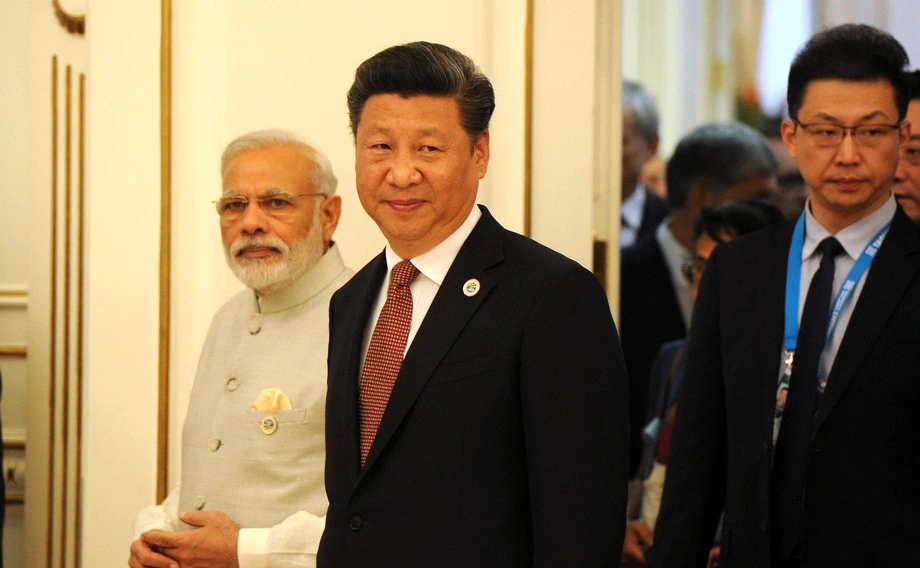
The release of the US report coincides with ongoing diplomatic efforts by New Delhi and Beijing to stabilize bilateral relations following years of tension that escalated after the 2020 Galwan Valley clashes. In September, Prime Minister Narendra Modi and Chinese President Xi Jinping met on the sidelines of the 18th BRICS Summit in New Delhi.
During their discussions, Prime Minister Modi emphasized that differences should not become disputes and that both sides must be guided by mutual respect, mutual sensitivity, and mutual interest. President Xi stated that the two countries should view their relationship from a strategic perspective while keeping long-term development in mind.
Despite these diplomatic engagements, fresh tensions have persisted. Last month, the chief of the Indo-Tibetan Border Police admitted that confrontations with Chinese troops continue at multiple locations along the border in Arunachal Pradesh, illustrating that strategic distrust remains high.
Timeline of Key Developments
- May 2025: India launches Operation Sindoor following a terrorist attack in Pahalgam that kills 26 people, while Chinese technical personnel assist the Pakistan Air Force.
- August 2025: China temporarily lifts certain export restrictions ahead of high-level diplomatic visits.
- September 2025: Prime Minister Narendra Modi and President Xi Jinping meet at the BRICS Summit in New Delhi to discuss boundary dispute resolutions.
- November 18, 2026: The US-China Economic and Security Review Commission releases its annual report warning of a two-front conflict risk.
At a Glance
- A US congressional panel warned that deepening military ties between China and Pakistan increase the risk of a two-front security challenge for India.
- The report highlighted China's indirect support for Pakistan during the May 2025 conflict following the Pahalgam terror attack.
- The commission recommended that Washington and New Delhi expand operational defence coordination in the Indian Ocean, including joint undersea surveillance and intelligence sharing.
- China continues to apply economic and industrial pressure on India through export controls on critical materials, advanced technology, and pharmaceutical ingredients.
- Prime Minister Narendra Modi and President Xi Jinping recently expressed commitment to resolving border disputes while maintaining strategic autonomy in foreign policy.