

Britain Reveals Offensive Cyber Missions
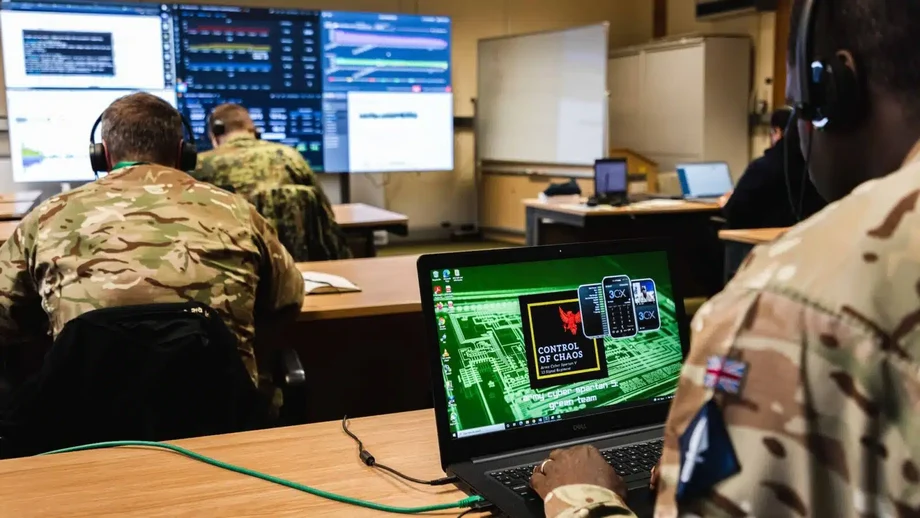
General Sir Rob Magowan confirmed that the United Kingdom is actively conducting offensive cyber operations against Russia, China, Iran, and North Korea. Speaking to media outlets, the top military commander stated that these four nations pose direct threats to the British way of life. The disclosure marks a rare public admission of covert digital missions carried out by the nation's specialized military and intelligence units. The announcement coincided with the official opening of a new base for the country's main cyber unit in Samlesbury, Lancashire, by King Charles on November 16, 2026. General Magowan commands the military Cyber and Specialist Operations Command and oversees digital combat missions alongside GCHQ director Anne Keast-Butler.
目次
The newly unveiled headquarters, housed at Ribble House, serves as the main base for the National Cyber Force. Established in November 2020 following an announcement by the Prime Minister alongside statements from senior officials including Defence Secretary Ben Wallace and Foreign Secretary Dominic Raab, the organization unites military personnel, intelligence agents, and technical scientists under a single command structure. The unit draws talent and tools from the Ministry of Defence, the Government Communications Headquarters, the Secret Intelligence Service known as MI6, and the Defence Science and Technology Laboratory. Legislative backing for these operations comes from existing statutes such as the Intelligence Services Act and the Investigatory Powers Act, ensuring that missions remain targeted, legal, and proportionate. Officials trace the origins of these offensive capabilities back to pioneering digital actions against Daesh in 2016 and ISIS propaganda networks in 2018.
Understanding the Hybrid Zone Below Open Conflict
General Magowan described the current security climate as a hybrid space existing below traditional warfare. When asked if the nation was engaged in active cyber war, the commander rejected the label while emphasizing the constant friction present in modern international relations. He noted that the country is neither at war nor at peace, operating instead within a gray zone where digital probes and counter-measures occur daily. Government figures point to a heavy volume of hostile digital traffic targeting British infrastructure and institutions. The National Cyber Force works to alter the calculations of hostile states by imposing tangible consequences for unauthorized intrusions.
Adversaries must realize that aggressive behavior in the digital realm carries a price. General Magowan stated that the military wants a wide array of options when dealing with hostile actors, rejecting the idea of a simple tit-for-tat exchange in favor of strategic flexibility. He explained that digital specialists possess the capability to examine an adversary computer network architecture and achieve direct effects within those foreign systems. While many of these missions remain classified to protect ongoing intelligence sources and methods, leadership insists that the actions help deter hostile activity despite the effects often remaining invisible to the targeted states.
Spate of Infrastructure and Retail Attacks Across Europe
Hostile cyber incidents have increasingly disrupted civilian services and commercial operations across Europe in recent months. In October, hackers launched an attack that compromised refrigeration systems at roughly seven hundred supermarkets in France, causing widespread food spoilage and starting small fires at fifteen locations. Similar remote tampering incidents struck grocery stores in Belgium, Sweden, and Finland, alongside an intrusion targeting France national blood bank services. Security investigators and intelligence agencies have tied several of these disruptive events to foreign actors, including units affiliated with Iran Islamic Revolutionary Guard Corps and pro-Russian hacktivist collectives such as NoName057(16) and Z-Pentest. Moscow has consistently denied involvement in these supermarket hacking sprees, dismissing allegations as unfounded accusations.
Britain has also experienced direct security challenges tied to foreign espionage and sabotage plots. In September, police arrested five men near Royal Air Force Fairford in western England, a facility previously used by American bombers. Authorities later charged two individuals under the National Security Act, with prosecutors alleging ties to Iranian intelligence operations. Shortly thereafter, the United States military relocated aircraft and fuel tankers away from Royal Air Force Mildenhall in eastern England due to specific security threats, raising the alert level at nearby installations. Earlier in the year, hackers also forced a small British gas power plant offline for four days during a targeted digital incident.
Targeting Criminal Networks and Online Harm
Beyond countering hostile foreign governments, the specialized cyber unit directs its resources against domestic and international criminal syndicates. General Magowan emphasized that operations extend to organized crime targets operating in digital spaces. Officials prioritize individuals who inflict harm online, explicitly including criminals involved in the sexual abuse and exploitation of children. This domestic protection mandate runs parallel to state-level deterrence, combining military technical capabilities with law enforcement objectives.
The cyber organization operates differently from standard defensive units. It stands separate from the National Cyber Security Centre, which focuses on protecting the domestic digital homeland, and from the Defence Cyber and Electromagnetic Force, which deploys mobile hunt forces abroad to assist allies. By merging the signals intelligence expertise of GCHQ with the operational planning of the Ministry of Defence, the human intelligence networks of MI6, and the scientific research of Dstl, the unified command aims to secure national infrastructure against evolving digital threats.
Escalating Defences and Strategic Deterrence
British military planners argue that effective defence requires active deterrence and the creation of strategic dilemmas for potential adversaries. Former National Security Adviser Lord Mark Sedwill recently noted at a security forum that the nation is already under daily attack, suggesting that going on the offensive provides necessary jeopardy for foreign probes. Similarly, former command leaders have warned against relying entirely on foreign artificial intelligence contracts as hostile states increase their cyber operations. The integration of offensive digital tools into national defence policy represents a significant evolution in military strategy, moving beyond passive protection toward active disruption of hostile networks.
International alliances play a crucial role in managing these shared digital threats. The United Kingdom cooperates closely with partners in the Five Eyes intelligence-sharing network, which includes the United States, Canada, Australia, and New Zealand. As governments confront rising numbers of malicious intrusions, British officials maintain that their cyber forces will continue to meet foreign threats with direct digital effects, ensuring that hostile states cannot operate without consequence.
At a Glance
- General Sir Rob Magowan confirmed offensive cyber operations targeting Russia, China, Iran, and North Korea.
- The National Cyber Force headquarters in Samlesbury, Lancashire, was officially opened by King Charles.
- The specialized unit combines personnel from GCHQ, the Ministry of Defence, MI6, and the Defence Science and Technology Laboratory.
- The National Cyber Security Centre recorded 1,831 cyberattack reports over the past year, with 80 classified as nationally significant.
- Operations operate under existing legal frameworks including the Intelligence Services Act and the Investigatory Powers Act.
- The unit also targets organized crime groups and individuals causing online harm to children.