
Subsidy Program Closes Months Ahead of Schedule
Japan brought an unexpected halt to its popular financial support program for eco-friendly cars, cutting off applications on November 20, 2026. The Ministry of Economy, Trade and Industry managed the initiative, officially titled the Clean Energy Vehicle Introduction Promotion Subsidy. Officials originally planned to accept paperwork until mid-February of the following year, but surging demand drained the financial reserves much faster than anticipated.
目次
Car buyers rushed to secure financial backing before the funds disappeared entirely. That last-minute rush accelerated the depletion of the budget, forcing the government to draw a hard line at the end of the business week in late November. The program had been designed to ease the financial burden on consumers switching to greener transportation, but the sheer volume of purchases outpaced all initial forecasts.
Understanding the Financial Scale of the Program
The government initially set aside 110 billion yen (approximately $700 million) for the subsidy scheme under a supplementary budget for fiscal 2025. That money was intended to fund purchases through March 2026. Subsidies for battery electric vehicles offered up to 1.3 million yen, while plug-in hybrids and fuel cell vehicles also qualified for substantial financial support.
By November 16, the remaining balance stood at roughly 12.1 billion yen. Over the next few days, the fund dwindled at a dramatic pace, dropping to about 66 billion yen by November 19. When authorities tallied submissions received on November 20, the remaining balance plummeted to approximately 930 million yen. Because that remaining amount could not cover the incoming wave of applications, officials closed the window immediately, setting an online application cutoff at 17:15 on November 20.
Surging Sales and New Model Launches
Automakers introduced fresh vehicle lineups throughout the year, sparking intense interest among drivers. According to statistics released by the Japan Automobile Dealers Association and the Japan Light Motor Vehicle and Motorcycle Association, cumulative electric vehicle sales from January through October totaled 111,876 units. In October alone, passenger electric vehicle sales reached 14,644 units, marking a 150 percent increase compared to the previous year and capturing 4.6 percent of total new-car sales.
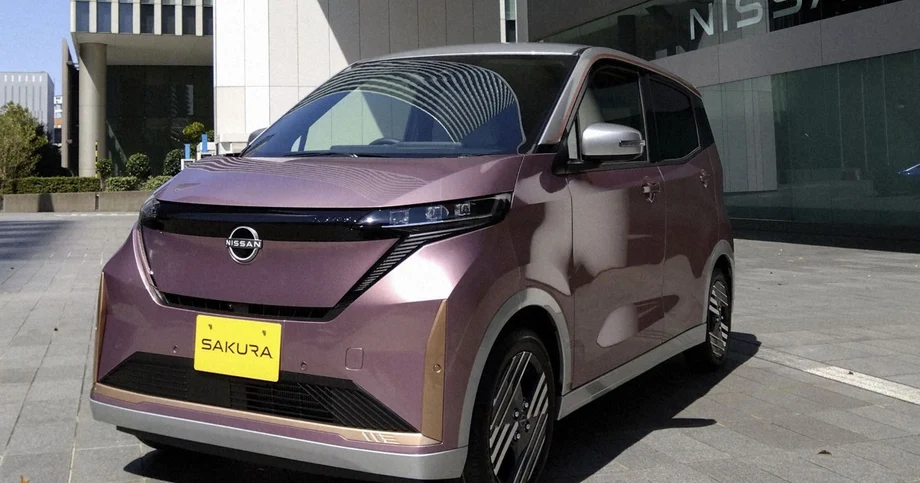
Popular models such as the Toyota bZ4X and the Nissan Leaf drove much of the buying momentum. Drivers also embraced mini electric vehicles, such as the Nissan Sakura, which offered lower price points alongside government incentives. Furthermore, Suzuki introduced its first mini electric vehicle, known as the e-Sky, during the final weeks of the application period, adding even more momentum to market inquiries.
Consumer Reactions and Dealership Concerns
Visitors browsing showroom floors expressed disappointment upon learning that financial assistance was no longer available. A 50-year-old male customer visiting a Tokyo dealership explained that the loss of financial incentives removed a primary motivator for switching from a gasoline-powered car to an electric model. Another buyer who secured her vehicle just before the cutoff noted that government backing served as the deciding factor in her purchase, alongside the practical benefit of using the car as an emergency power source during natural disasters.
Dealership managers voiced similar worries regarding market stability in the coming months. Store managers noted that financial incentives played a vital role in sustaining strong sales figures throughout the year. Without immediate clarity on future government programs, sales staff faced difficulties in guiding customers who expected financial aid.
Uncertainty makes it difficult to guide customers, and a smooth transition without a blank period would be much appreciated.
That observation came from Masato Shibata, store manager at a Tokyo dealership branch, who highlighted the risk of a sales slowdown.
Broader Industry Perspectives and Future Policies
Representatives from major manufacturing organizations emphasized that the domestic market for eco-friendly vehicles remains in a delicate developmental stage. Industry advocates argued that continuous financial backing remains essential to maintain consumer momentum. Without ongoing incentives, automakers worry that the transition toward widespread electrification might lose steam as buyers hesitate to pay full market prices.
Policy planners face a difficult balancing act when designing green energy incentives. While generous cash grants successfully accelerate consumer adoption, they make budget consumption rates unpredictable. Government officials have not yet announced specific plans for a replacement program for the upcoming fiscal year. Past precedents suggest that any future initiatives might apply only to vehicles registered after a specific date, leaving a temporary gap in support for prospective buyers.
Fairness Debates and Long-Term Market Adjustments
The subsidy structure has generated continuous debate regarding fairness among different automotive brands. Because the calculations and payout caps varied by vehicle type and manufacturer, critics frequently argued that certain companies received more favorable treatment than others. Under the revised rules effective from January 2026, the maximum subsidy reached 1.3 million yen for battery electric vehicles, 850,000 yen for plug-in hybrids, and 1.5 million yen for fuel cell vehicles.
Looking ahead, policymakers are exploring structural changes to vehicle taxation to maintain equity across different engine types. Conventional gasoline cars and standard hybrids are subject to fuel taxes based on consumption, whereas electric vehicles currently escape those specific levies. To address that imbalance, government authorities are considering the introduction of a new tax specifically targeting electric vehicles by May 2028.
The Bottom Line
- The Ministry of Economy, Trade and Industry stopped accepting subsidy applications on November 20, 2026.
- The initial 110 billion yen budget was nearly exhausted, leaving only about 930 million yen remaining.
- Electric vehicle sales reached 111,876 units between January and October.
- Maximum subsidies provided up to 1.3 million yen for eligible battery electric vehicles.
- No official decisions have been announced regarding replacement subsidy programs for the following fiscal year.