
Unwritten Deals Shape Silicon Supply Chains
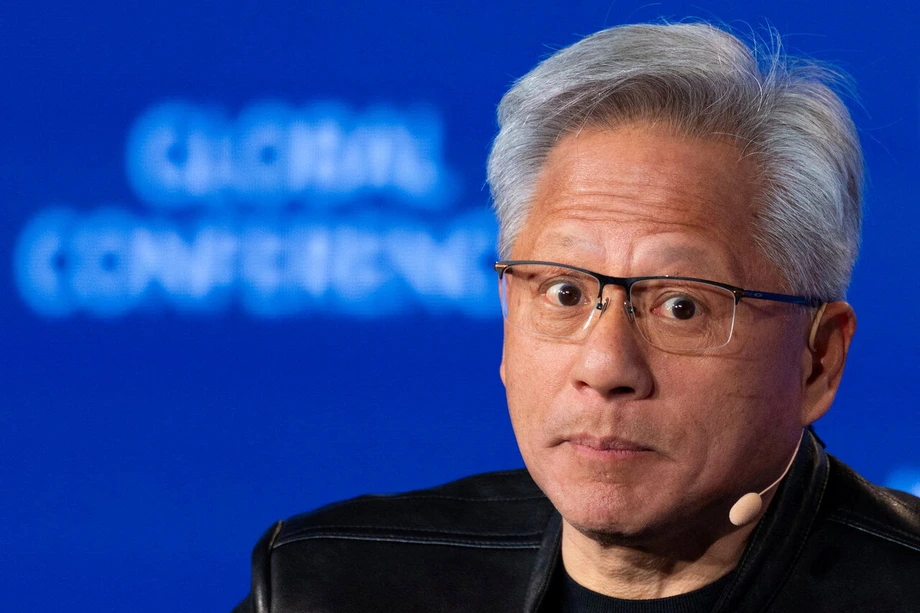
Jensen Huang spent three decades leading Nvidia without ever signing a formal contract with its most critical manufacturing partner, Taiwan Semiconductor Manufacturing Company. The staggering commercial relationship, encompassing tens and possibly hundreds of billions of dollars, relied entirely on personal trust and handshake agreements. The disclosure emerged around the one-hour-and-thirteen-minute mark of episode 494 of the Lex Fridman Podcast, a long-form interview program hosted by AI researcher and MIT scientist Lex Fridman. Nvidia co-founder Jensen Huang revealed the unconventional arrangement during the more than two-hour conversation released in March 2026. The revelation startled financial analysts and corporate governance experts who are accustomed to extensive legal frameworks governing transactions between corporations with a combined market capitalization exceeding five trillion dollars. Huang explained that the partnership survived for thirty years through mutual reliance and an informal system of rough justice where both companies occasionally gained or lost on individual terms while preserving an incredible overarching relationship. The discussion also brought to light a historic turning point from 2013, when TSMC founder Morris Chang invited Huang to become the chief executive officer of the foundry giant. Huang declined the offer, choosing instead to remain at Nvidia while maintaining a close personal friendship with Chang, whom he regards as one of the most respected business leaders in history.
目次
The absence of written contracts extended far beyond the primary foundry relationship, encompassing numerous suppliers and customers across the artificial intelligence hardware ecosystem. SemiAnalysis founder Dylan Patel explained during a CNBC appearance that Huang routinely engaged directly with the heads of even tiny component suppliers generating only a few hundred million dollars in annual revenue. Huang persuaded these key manufacturers to commit their entire output to Nvidia long before competitors realized a bottleneck was forming. Artificial intelligence computing systems depend heavily on every single component within a server rack, meaning that a minor subcomponent supplied by a relatively small firm can halt the delivery of billions of dollars in finished infrastructure. Management noted that demand has consistently outstripped manufacturing output, with inventory expanding rapidly to thirty-one billion six hundred million dollars by July 2026. Industry observers noted that this hands-on approach allowed Nvidia to scale production at an unprecedented pace during the initial stages of the artificial intelligence boom. However, the departure of the long-serving executive has transformed what was once viewed as an agile business advantage into a pressing corporate vulnerability.
Leadership Transition and Corporate Governance Pressure
Jensen Huang resigned from all positions at Nvidia on November 11, 2026, following public disclosures regarding personal relationships, including one with Alice Huang, a former executive at Singapore-based data center operator Megaspeed International who was suspected by United States intelligence officials of having connections to Chinese state security. The board of directors accepted the resignation immediately, bringing an end to a thirty-three-year tenure that established the company as a dominant force in accelerated computing. Chief Financial Officer Colette Kress assumed the role of interim chief executive while retaining her financial responsibilities, stepping into leadership amid intense scrutiny from regulators, lawmakers, and investors. The abrupt leadership change triggered immediate market turbulence, including a share price drop of roughly seventeen percent over the year while broader market indexes rose. Corporate governance specialists and former Fortune 500 chief executives criticized the board for lacking a formalized emergency succession plan, pointing out that an unusually flat organizational structure with roughly sixty direct reports concentrated too much strategic authority in a single individual. Board chairman Harvey C. Jones confirmed during a quarterly earnings call that directors had unanimously accepted the resignation and did not plan to reinstate Huang as chief executive, despite appeals from prominent figures and a petition signed by roughly thirty-six thousand supporters, including Tesla chief executive Elon Musk.
Political and regulatory pressures intensified immediately following the leadership transition as government officials examined both export controls and corporate governance practices. United States President Donald Trump publicly urged Nvidia to give Huang a second chance, praising his contributions to the development of advanced computing hardware while acknowledging that he made serious mistakes. Meanwhile, lawmakers in Washington pursued formal inquiries into the circumstances surrounding the departure and the security of advanced semiconductor supply chains. A spokesperson for Senate Banking Committee Chair Tim Scott confirmed that Huang agreed to appear publicly before the panel, with initial discussions suggesting a target date before Christmas. Huang also reached an agreement with three House committees to participate in a closed-door, transcribed interview on December 1, 2026. These legislative proceedings run parallel to an independent review conducted by legal counsel retained by Nvidia, alongside joint investigations by the United States Department of Justice and the Department of Commerce concerning export compliance and data routing practices involving overseas entities.
Supply Chain Consolidation and Competitor Pressures
Nvidia moved quickly to reassure markets and stabilize manufacturing partnerships following the leadership shift, releasing a formal statement on November 18, 2026, detailing expanded commitments across its supplier network. Interim executive Colette Kress assured analysts that business operations continued as usual, noting that total purchase commitments reached three hundred ninety billion dollars and that major partners remained fully supportive of the company. The corporate strategy builds upon earlier initiatives, such as an expansion plan announced during a German industry conference in October 2026 aimed at increasing substrate manufacturing capacity over a three-year period. Major packaging and substrate suppliers across Asia stepped forward to confirm multi-year agreements designed to secure the production of next-generation artificial intelligence platforms. Taiwanese substrate manufacturer Unimicron confirmed an agreement reached in October 2026 to reserve dedicated capacity expanding through mid-2028, while rival supplier Ibiden committed to a multi-year project enlarging its advanced packaging substrate production in Taiwan by more than three and a half times by the third quarter of 2028. South Korean supplier Samsung Electronics also reinforced its semiconductor packaging capacity to ensure steady delivery of critical components required for artificial intelligence data centers.
Advanced packaging and testing operations saw similar capital infusions to prevent any disruption in the delivery of upcoming Vera Rubin architecture processors. Amkor Technology secured a nearly three billion dollar multi-year agreement involving advanced packaging facilities in Arizona and South Korea, supported in part by customer prepayments. Advanced Semiconductor Engineering signed a multi-year, multi-billion-dollar agreement with Nvidia to expand advanced packaging services in Taiwan, with capacity scaling upward through mid-2029. Testing partner King Yuan Electronics also expanded its footprint by constructing a dedicated United States facility backed by financial support from Nvidia, with volume production slated to begin in April 2027. These manufacturing arrangements operate alongside established written commitments, which reached two hundred seventy-nine billion dollars in supplier obligations by mid-2026. Industry analysts noted that while some informal handshake agreements negotiated personally by the former chief executive might experience friction or higher pricing, the vast majority of core foundry and memory supply remains anchored by binding, multi-year contracts that protect production schedules.
Regulatory Scrutiny and Export Control Investigations
The corporate transition unfolded against a backdrop of tightening government oversight regarding the global distribution of high-performance computing hardware. Federal investigators intensified examinations into whether restricted accelerators reached unauthorized end users through intermediary channels in Southeast Asia. Public disclosures revealed that Singapore-based Megaspeed International, which joined Nvidia's cloud partner program in November 2023, allegedly operated a network that routed restricted artificial intelligence hardware to entities in China in circumvention of United States export regulations. Authorities in Singapore charged several individuals with fraud in early 2025 following allegations of misrepresenting the intended deployment of servers equipped with advanced silicon. The United States Department of Commerce subsequently requested extensive sales records from Nvidia regarding direct and indirect transactions with the overseas firm, leading to internal export control enhancements and new federal rules requiring specific permits for offshore computing facilities operating in select regions. These regulatory developments highlighted the complex geopolitical dimensions surrounding the distribution of cutting-edge hardware designed for artificial intelligence training and inference.
Market dynamics shifted as rival technology conglomerates monitored the manufacturing bottleneck and sought alternative computing capacity. Alphabet subsidiary Google continued aggressive capital expenditure expansion, dedicating ninety-one billion five hundred million dollars to infrastructure in 2025 to support proprietary Tensor Processing Unit chips developed in partnership with Broadcom. Financial analysts at Morgan Stanley estimated that direct sales of Google custom AI processor systems could reach eighty-four billion dollars by 2027, positioning the search giant as a primary beneficiary if any manufacturing capacity became dislodged from Nvidia supply lines. Semiconductor analysts observed that Nvidia maintains a narrow technological lead of roughly twelve months over its closest competitors, making uninterrupted access to specialized components a vital factor in maintaining market share. The intersection of leadership turmoil, congressional inquiries, and strict export enforcement creates a challenging operating environment for the interim leadership team as they navigate the remainder of the fiscal year.
Corporate Governance and Risk Management Lessons
The events surrounding the sudden departure of the long-standing chief executive prompted a broad reassessment of executive oversight and risk management within major technology enterprises. Governance experts emphasized that exceptional corporate valuations require robust institutional structures that do not rely excessively on the personal relationships of a single founder. The leadership crisis at Nvidia recalled earlier governance debates across Silicon Valley regarding the balance between entrepreneurial agility and institutional resilience. Commentators noted that while informal negotiation styles can accelerate product development during early growth phases, publicly traded corporations of a certain scale demand transparent succession planning and formalized contractual safeguards. The board of directors maintained a firm stance on separating personal conduct investigations from ongoing commercial operations, implementing dedicated oversight committees to manage national security and export control compliance without interrupting product delivery timelines.
Investors and analysts monitoring the quarterly earnings report in November 2026 focused heavily on gross margin guidance and inventory accumulation metrics to gauge the immediate resilience of the supply chain. Management reaffirmed expectations for gross margins to stabilize near seventy-one to seventy-two percent during the upcoming quarter as memory component costs fluctuate, while total inventory reserves remained elevated to buffer against potential disruptions. The company continues to evaluate internal and external candidates for the permanent chief executive position with the assistance of executive search firm Heidrick and Struggles. Whether the manufacturing ecosystem will maintain its reliance on personal diplomacy or transition fully toward formalized legal agreements remains a central question for the semiconductor industry as it enters a new phase of expansion under interim leadership.
At a Glance
- Jensen Huang led Nvidia for thirty years without signing a formal contract with primary manufacturing partner Taiwan Semiconductor Manufacturing Company, relying instead on personal trust and handshake agreements.
- Huang resigned from all positions at Nvidia in November 2026 following disclosures regarding personal relationships and inquiries into export control compliance involving a Singapore-based data center firm.
- Chief Financial Officer Colette Kress assumed the role of interim chief executive while the board of directors initiated a search for a permanent successor.
- Major supply chain partners, including Unimicron, Ibiden, Amkor Technology, and Advanced Semiconductor Engineering, announced multi-year expansion agreements to secure future artificial intelligence infrastructure production.
- United States lawmakers scheduled congressional hearings, including public testimony before the Senate Banking Committee, to examine export controls, corporate governance, and semiconductor supply chain security.